MICA PGDM-C vs PGDM: Strategic Marketing or Data, Strategy & AI?
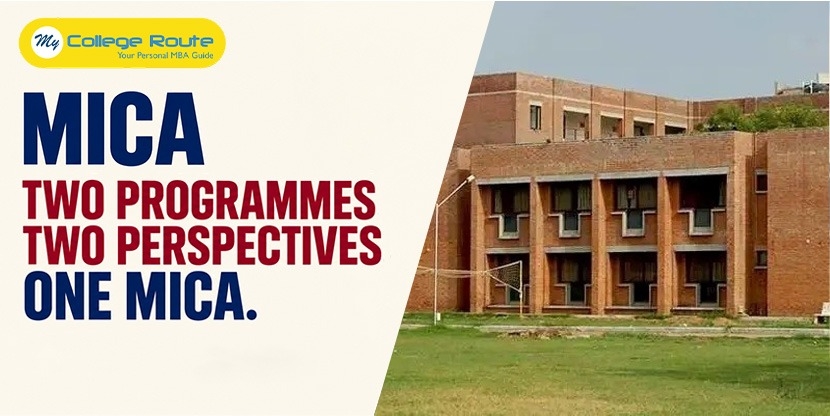
Business education is often built around familiar categories: finance, marketing, operations, strategy, analytics. MICA takes a different starting point. Its PGDM-C and PGDM programmes are built around two very different ways of understanding business- one begins with people, culture and brands, while the other begins with data, technology and AI. The destination, however, is the same: developing managers who can think beyond a single function and make decisions in a business environment that is becoming increasingly complex.
This is what MICA means when it describes its PGDM-C and PGDM as programmes that create a different breed of leaders. The difference is not simply in the subjects students study. It lies in the kind of questions they are encouraged to ask, the problems they learn to solve and the way they connect human understanding with business and technology.
Two Programmes, Two Starting Points
At the Mudra Institute of Communications, Ahmedabad, the School of Management offers two two-year residential programmes: PGDM-C and PGDM. They share the larger MICA learning environment, but their academic directions are distinctly different.
The PGDM-C is focused on Strategic Marketing, with an emphasis on brand, content and culture. Its specialisation areas include Brand Strategy & Management, Product Innovation & Management, Media, Entertainment & Sports Business, and Sales & Customer Relationship Management. The programme is designed for students who are interested in understanding what drives consumer behaviour, how brands acquire meaning and how communication can influence people.
The PGDM takes a different route, focusing on Data, Strategy & AI for next-generation managers. Its areas include Business Analytics & Consulting, Data Science & AI as a compulsory specialisation, BFSI & Fintech, and Technology-driven Business Strategy. Here, the emphasis moves towards patterns in data, evidence-based decision-making, quantitative thinking and the use of technology to solve business problems.
So, for students comparing MBA colleges in India, the choice is not simply between two management programmes. It is between two ways of approaching the business world.
PGDM-C: Understanding people before building brands
The PGDM-C is particularly interesting for students who see marketing as more than campaigns and advertising. Its foundation lies in cultural intelligence, brand strategy and communication-led thinking.
A student entering this programme may be curious about why consumers behave differently across markets, why some brands become part of popular culture while others disappear, or how a product can be positioned in a way that makes people care about it. These questions lead naturally into areas such as consumer psychology, cultural insights, brand building and narrative development.
That combination can prepare students for careers in brand management, advertising, entertainment, sports and other areas where understanding audiences is central to business success. The programme's focus on Product Innovation & Management also brings another dimension into the picture: understanding what people need and translating that understanding into products and experiences.
In that sense, PGDM-C develops a form of leadership that begins with observation. Before deciding what a business should say or sell, students are encouraged to understand the people and cultural contexts surrounding the decision.
PGDM: Turning data and technology into business decisions
The PGDM begins from a different point. For students who naturally look for patterns in numbers or are curious about what technology can do for business, the programme creates a moreanalytics-driven route into management.
Business Analytics & Consulting, Data Science & AI, BFSI & Fintech, and Technology-driven Business Strategy give students exposure to areas where quantitative thinking and technological capabilities are becoming increasingly important. MICA positions Data Science & AI as a compulsory specialisation within the PGDM, underlining how central this orientation is to the programme.
But the purpose is not to turn management students into technical specialists alone. The larger objective is to understand how data and technology can improve managerial decisions. A future consultant needs to interpret information before recommending a strategy. A fintech professional needs to understand both technology and financial behaviour. A manager working with AI needs to know not only what the technology can do, but where it can create meaningful business value.
This is where the PGDM's emphasis on quantitative rigour and strategic thinking becomes relevant.
The common thread: learning to connect different worlds
The interesting part is that MICA does not present PGDM-C and PGDM as competing versions of the same programme. Its own positioning describes them as two paths, one vision. One starts with understanding people and culture; the other begins with data and technology. But MICA's larger belief is that future leaders will need to understand both worlds.
The programme journey reflects this thinking. Students begin with foundational business principles, cultural studies and economic thinking. They then move towards practice through technology tools, data analytics, CRM, design thinking, industry projects and competitions. From there, they develop deeper expertise in their chosen direction before applying their learning through immersion, projects and other real-world experiences.
This progression is important because leadership cannot be developed simply by accumulating subjects. Students need opportunities to test what they know, work with others and make decisions when there is no perfectly structured answer.
Where the MICA experience becomes different
MICA's approach also extends beyond the formal curriculum. Its student-led committees, competitions, technology labs and wider campus activities create situations in which students have to take responsibility for ideas and outcomes. The institute describes its learning approach through classrooms, teamwork and competitions, technology-enabled learning and flexible course choices.
The emphasis on immersion adds another layer. Rural exposure, international opportunities, capstone projects and the MICA Innovation Lab give students opportunities to take their learning into different contexts. Such experiences can be particularly valuable when the programme is dealing with subjects as broad as consumer behaviour, technology, culture and business strategy.
This also makes the experience student-centric. Two students may enter MICA with completely different interests and eventually leave with very different career ambitions. One may want to build brands and work in strategic marketing; another may want to work in consulting, data science, fintech or technology-led business. The programme structure allows those differences to become part of the learning journey rather than something students have to fit into a single mould.
Which path makes sense for you?
This is perhaps the most useful question for someone shortlisting MBA colleges in Ahmedabad or looking at the wider group of PGDM colleges in India.
If you are fascinated by consumer behaviour, brand building, cultural trends, communication and the way stories influence people, PGDM-C offers a natural fit. If you are excited by AI, data, quantitative decision-making, technology and the digital transformation of industries, PGDM points in a different direction.
Neither route is automatically better. The starting point is simply different.
My College Route's MICA profile positions the institute around Strategic Marketing and Communications and highlights areas including brand management, digital marketing, media, analytics and consumer insights. For students using My College Route while comparing MBA institutes in India, this provides useful context for understanding where MICA fits within the larger B-school landscape.
But the more important comparison is personal. Instead of asking only which college ranks higher or which programme has more specialisations, students should ask themselves what kind of problems they enjoy solving.
Do you want to decode consumers and turn insights into brands and narratives? Or do you want to identify patterns in data and use technology to make better business decisions? MICA gives students both possibilities.
That is ultimately what makes the phrase “a different breed of leaders” relevant. The PGDM-C and PGDM do not aim to produce graduates who all think alike. They offer two distinct routes, but both encourage students to move beyond narrow functional thinking and develop the ability to connect ideas, people, information and business outcomes.
For students exploring the top MBA colleges in India, that may be the real value of looking closely at MICA. A management programme can teach you what a business does. The right programme can also influence how you learn to see the business in the first place
© 2026 mycollegeroute.com All Rights Reserved. Website designed by Orbit Inhouse